Independent desk · Sydney
Three free candy match-3 games, read slowly
PuzzleRead is a small editorial page about free-to-play match-3 puzzles built around sweets, jellies and biscuit tiles. Only three titles sit on the shelf at any time, and each one is played for a fortnight on an ordinary mid-range Android handset before a single line is written about it.
Nothing here is sold, unlocked or handed over. The page has no sign-up form, no push prompts and no advertising: it is a reading desk, and the only thing it asks of you is a letter if something in the notes is wrong.
On the shelf, September
 Candy Pop Story: Match 3
4.5
Candy Pop Story: Match 3
4.5
 Sweet Candy Mania
4.9
Sweet Candy Mania
4.9
 Candy Bomb Smash
4.5
Candy Bomb Smash
4.5
Figures beside each title are the public Google Play star ratings for Australia. They are quoted, never adjusted.
Section one
What is on the shelf this season
Three titles, three different ideas about what a candy board should feel like under a thumb. Below each entry you will find the mechanics that actually drive the stages, how long a sitting tends to last, how forgiving the opening hours are, and the parts that wore thin by the end of the fortnight. Screenshots come from the Google Play listing of the title they sit beside.
-
01
Candy Pop Story: Match 3
The board is the quiet star here. Stages stack a jam layer under a waffle tray, so a match that looks wasteful on the surface is often the only way to reach the tiles buried two levels down — and the goal counter in the top corner keeps score of exactly what still has to come out. Moves are finite and generous early on, which gives the first thirty stages the pace of a crossword rather than a race.
Boosters arrive as spinning tops and striped wafers rather than as a shop window, and the game is happy to let you sit and stare before committing to a swap. Two things wore thin: the map screen loads a short animation every time it opens, and a handful of the water stages hide their objective behind decorative lily pads until you tap the goal panel.
Desk note: the most patient board of the three, and the one I would hand to somebody who has never played a match-3 puzzle before.
Listing on Google Play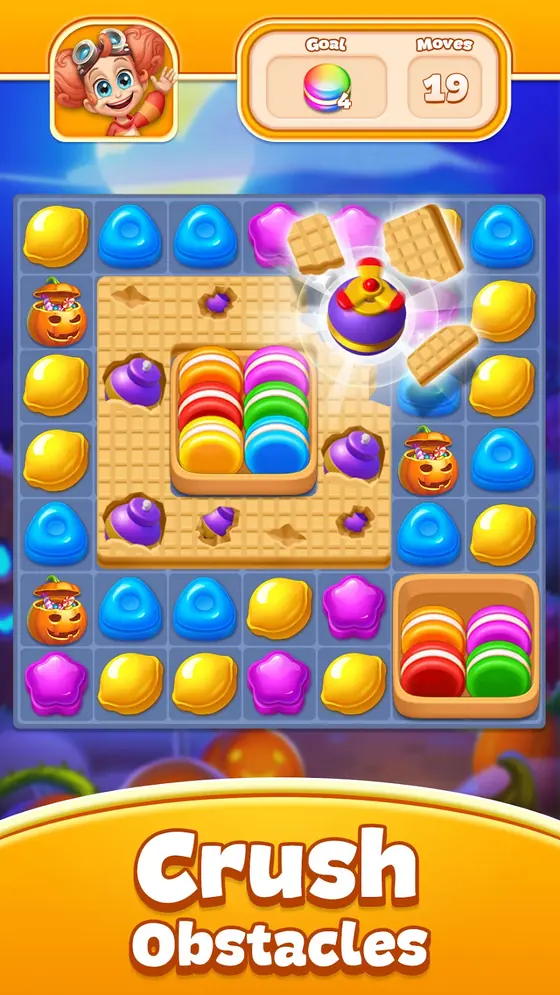
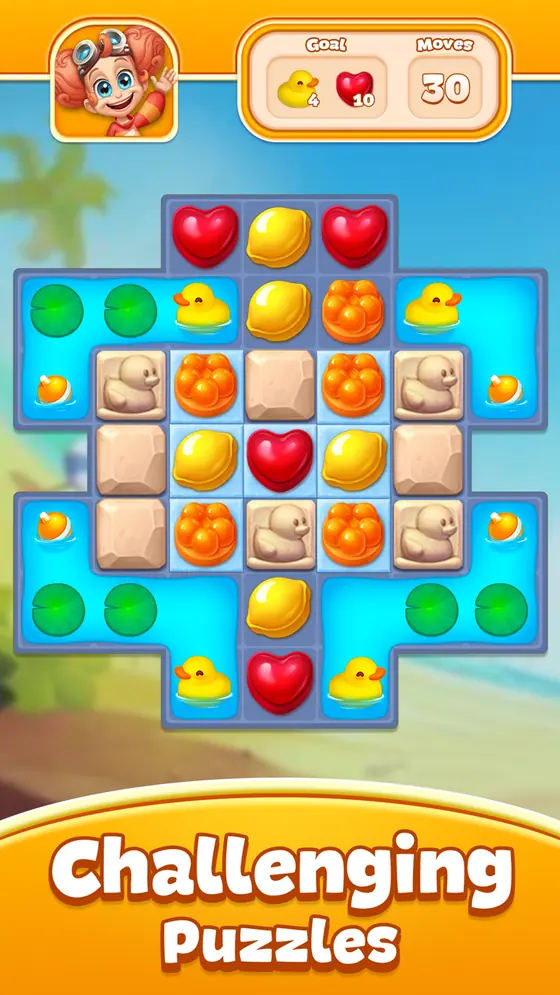
Left: a layered tray stage. Right: a water stage with a duck objective and a thirty-move budget.
-
02
Sweet Candy Mania
The loudest shelf-mate, and the quickest. Stages are short, the board is open rather than layered, and a cleared cluster throws light across the whole grid before the pieces settle. Collection targets — a cake, a tin of biscuits, a run of stars — sit above the board and tick down fast enough that a sitting rarely passes five minutes.
What holds it together is the magic candy: match it into a neighbour and it fires a line at every matching tile on the screen at once, which makes the mid-game stages feel like solving a knot rather than clearing a row. The presentation is busy to the point of noise, and the pace tightens sharply around stage forty, where the generous opening suddenly asks for planned sequences instead of quick taps.
Desk note: the best pick for a short queue or a tram ride; the least restful of the three if you want quiet.
Listing on Google Play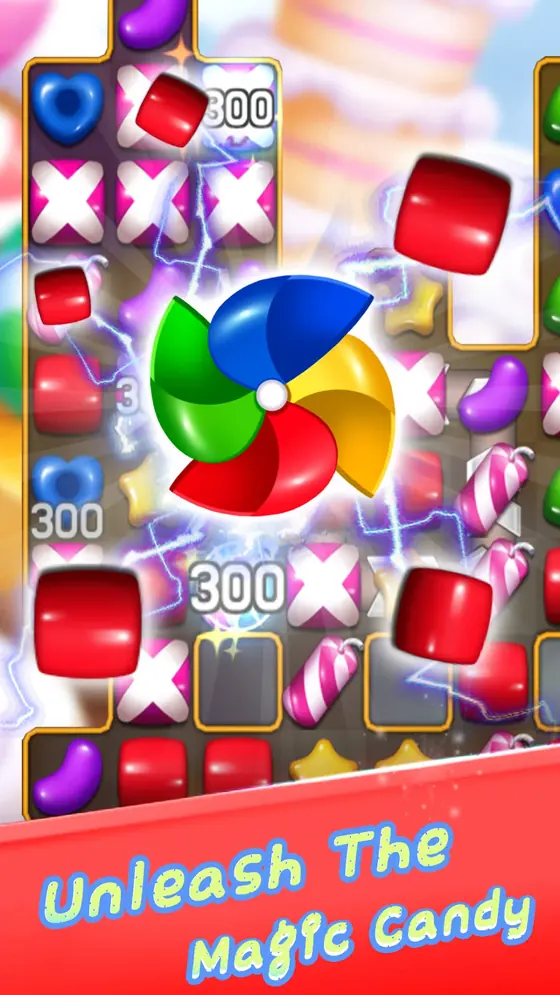
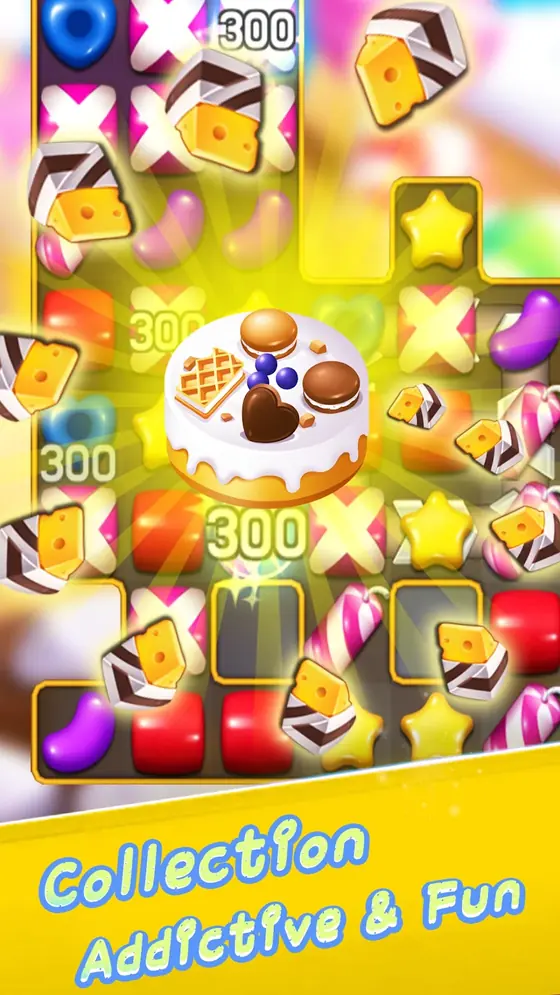
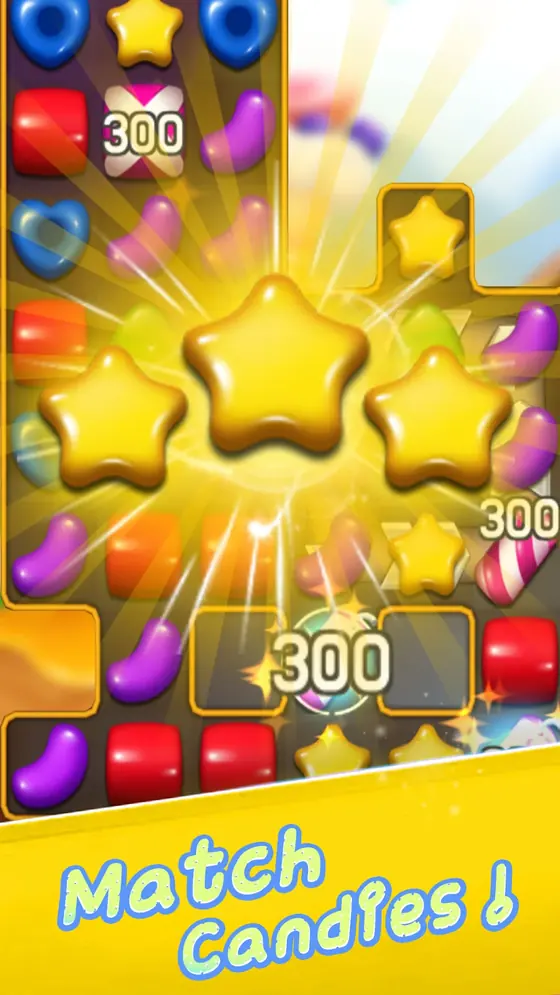
Three stages from the middle chapters: spinner clear, cake collection and a star run.
-
03
Candy Bomb Smash
The chunkiest board of the three. Tiles are large, the grid is often boxed in by crates and ice, and progress is measured in freeing things — gummy rabbits frozen mid-hop, jars pinned under a lid — rather than in clearing a colour. Props do most of the heavy lifting: a mallet takes out a single stubborn tile, and the ice cracks in two passes instead of one, which slows the rhythm in a way that suits a longer sitting.
The tutorial is unusually thorough and the opening chapters are slow, so it takes an hour before the game shows its real shape. Once it does, the crate stages are the most interesting puzzles on the whole shelf. The trade-off is a busy interface: three prop buttons, a stage banner and a chapter map all compete for the bottom third of the screen.
Desk note: slowest to open up and the most satisfying once it does — worth the first hour of patience.
Listing on Google Play
A mid-chapter beach stage with the mallet prop in use.
Section two
How this desk works
PuzzleRead carries no advertising, no sponsored placements and no affiliate links. Nothing on the shelf was supplied, approved or paid for by a developer, and the desk has no arrangement with Google LLC. The whole page is written and published by one person in Sydney.
The reading is funded by a small paid subscription called Read Room. It is the only paid thing on the site, it is entirely optional, and the notes you are reading right now stay open to everybody whether or not anyone subscribes.
A$0.99 per monthRead Room · billed monthly · cancel any time
What lands in a Read Room letter
Twice a month a subscriber receives an e-mail from the desk containing a full write-up of a puzzle level or board concept designed here rather than lifted from a store listing. Each letter carries a step-by-step walk-through of the level from the first swap to the last, a diagram of where each booster should be spent and why, and a short breakdown of the mechanic the level was built to teach — cascade timing, layered trays, locked tiles.
- 01To start. Send a letter to the desk address below with the words “Read Room” in the subject line. A reply comes back with the price, the billing date and a confirmation request.
- 02To confirm. Nothing is ever charged until you answer that reply. No confirmation, no subscription, no charge — there is no checkout on this site and no card details are stored here.
- 03To stop. Reply to any Read Room letter with the word “stop”. The subscription ends from the next billing date and you keep every letter already sent.
Read Room letters are sent only to people who asked for them and every letter identifies the sender and carries a working unsubscribe line, as the Spam Act 2003 (Cth) requires. Full conditions sit in the terms and conditions.
Section three
The three titles side by side
Everything in this table was timed and counted by hand during the reading fortnight, on the same handset and the same home connection.
| Title | Board and genre | Typical sitting | Entry threshold | Away from a connection | Play rating (AU) |
|---|---|---|---|---|---|
| Candy Pop Story: Match 3 | Layered jam and waffle trays, casual match-3 | 4 to 6 minutes a stage | Gentle — the first thirty stages teach every mechanic | Stages run fully offline | 4.5 |
| Sweet Candy Mania | Open score board with collection targets, casual match-3 | 3 to 5 minutes a stage | Moderate — the pace tightens around stage forty | Playable offline after the first load | 4.9 |
| Candy Bomb Smash | Crate-and-ice board with rescue objectives, casual match-3 | 6 to 9 minutes a stage | Patient — a long tutorial and a slow first hour | Whole chapter run offline | 4.5 |
The three titles were chosen because they share a genre and a sweets theme yet solve the same board in three different ways, which makes them worth reading against each other. Sitting length is the median of twenty timed stages per title; the star figures are the public Google Play ratings for Australia and are quoted exactly as shown there.
Section four
Write to the desk
There is no form on this page and no newsletter box. Everything reaches the desk the same way: a plain e-mail, answered by the person who wrote the notes, usually within two working days.
- A correction: a stage timing, a mechanic described wrongly, a star rating that has moved since publication.
- A Read Room enquiry: starting, pausing or ending the subscription, or asking what a past letter covered.
- A privacy request under the Australian Privacy Principles, or a question about a screenshot used on the page.
The desk address
letters@puzzleread.com Open a letter
Emily Patterson
Publisher of PuzzleRead, an individual
Ground Floor/143 York St
Sydney NSW 2000, Australia
Telephone +61 2 9061 3409